You're fighting the wrong battle. And so is everybody else…
There’s a familiar scene at every cybersecurity event. Vendors line up, pitches are polished, and somewhere in the crowd stands the CISO or CIO: surrounded, approached, and sold to. They are the target. The endpoint of every funnel. The person whose signature unlocks the budget. But here’s the uncomfortable truth: that dynamic is broken. Not just for the vendors and MSPs trying to close deals; but for the CISOs and CIOs themselves. And ultimately for the organizations they’re trying to protect.
By Kristof De Roeck, Managing Director of All Colors of Communication, Benelux communication agency specialised in IT companies.
Most CISOs and CIOs don’t just face external threats. They face an internal one too: the constant battle to make cybersecurity understood at board level. They sit between a technical reality that is growing more complex by the day, and a boardroom that still too often sees security as a cost center rather than a strategic asset.
That internal battle is the one that keeps them up at night. Not the threat landscape, but the translation problem. How do you turn firewall logs and vulnerability scores into a conversation that resonates with a CFO? How do you explain the value of what didn’t happen? How do you make the board feel the urgency without triggering panic or paralysis? And yet, most CISOs and CIOs walk into those boardroom conversations alone. Armed with dashboards their directors don’t read and statistics that land without context. The pitch to their own leadership too often falls flat. Not because the threat isn’t real. But because the story isn’t told in the right language.
The real gap isn’t technical. It’s communicative.
The cybersecurity industry has invested billions in making the technology better. Faster detection. Smarter response. More integrated platforms. And that matters. But the gap that still costs organizations the most isn’t in the SOC. It’s in the boardroom. It’s in the budget conversation that ends with “let’s revisit this next quarter.” It’s in the risk committee that nods politely and moves on to the next agenda item. CISOs and CIOs know this. They feel it every time they walk out of a board meeting having failed to secure the investment their infrastructure genuinely needs.
What’s missing is not more data. It’s a compelling narrative. One that connects technical risk to business consequence. One that frames resilience not as a cost, but as a competitive advantage. One that gives the board not just a threat report, but a strategic story they can act on. And here’s the uncomfortable mirror image of that problem: most vendors and MSPs are making it worse. Not intentionally. But by showing up with feature lists and threat statistics – aimed at the CISO, not designed with them – they’re adding noise instead of signal. They’re pitching to the person who already understands the risk, rather than helping that person convince the people who control the budget. The result? The CISO listens, evaluates, and then still has to fight the same internal battle alone.
What good partnership actually looks like
Imagine a different dynamic. A vendor or MSP walks in not with a slide deck, but with a question: “What does your board need to hear? And how can we help you say it?”
That shift changes everything. Suddenly, they’re not a vendor. They’re a strategic partner. They understand the internal challenge, they speak the language of business risk, and they help translate technical complexity into boardroom clarity. They offer communication frameworks alongside security frameworks. They help build a narrative around resilience, continuity, and competitive advantage… not just compliance checkboxes and patch schedules. For CISOs and CIOs, this changes how partner selection should work. The question is no longer just: does this technology solve my problem? It becomes: does this partner understand my full challenge, including the one I face inside my own organization.
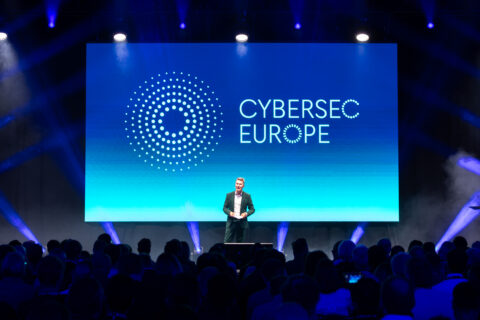
So when you walk the floor at Cybersec Europe this year, look beyond the product features. Ask yourself: does this company speak the language of my board, or only the language of their engineers? Are they interested in my problem, or just in closing the deal? The way a vendor communicates with you on the show floor tells you a great deal about how they’ll communicate with you once you sign the contract.
The partners worth finding
The best MSPs and vendors are not the ones with the most advanced threat detection. They’re the ones who understand the full picture: the technical challenge and the human one. The ones who invest in the relationship before the sale. Who create content, conversations, and frameworks that genuinely help the CISO and CIO do their job better. Not just at the point of purchase, but every day before and after.
They are the ones you call when something goes wrong, not just when you’re reviewing your vendor list. And in a crowded market where everyone claims to offer the best protection, trust is the real differentiator. And trust is not built through feature lists. It’s not built by a simple ‘trusted advisor’ tagline. It is built through understanding, through consistency, and through showing up as a genuine partner in the challenges your customer faces – including the ones that happen in the boardroom, not just the network.
Claiming your seat at the table
Cybersecurity has matured into a business-critical discipline. The CISOs and CIOs who will have the most impact are those who claim their seat at the strategic table. Not just as technical guardians, but as communicators of business risk and organizational resilience. That means telling a better story. And it means demanding partners who help you tell it.
You are not just a gatekeeper to the IT budget. You are an advocate for the entire organization. Find the partners who see that. The ones who show up not to pitch, but to listen. The ones who understand that the real product they’re selling is not a platform or a service, but the confidence of a CISO or CIO walking into a board meeting knowing they have the right story, the right data, and the right partner behind them.
The cybersecurity industry talks a lot about zero trust. Maybe it’s time to apply that same critical lens to the vendor-CI(S)O relationship – from both sides. Vendors and MSPs: don’t assume the pitch will land. Earn the trust by listening first and helping your customer communicate upward. CISOs and CIOs: don’t settle for partners who only speak to your technical reality. Demand the ones who help you own the strategic conversation too. The CISO and CIO are not the target audience. They’re the greatest ally. And the best vendors and MSPs already know that.
Register for free!
As cyber attacks continue to threaten today’s tech landscape, this event is the premier platform for seasoned cyber security professionals and innovative start-ups to exchange knowledge and tackle cybersecurity challenges together. Organizations across all sectors will discover strategies to boost cyber resilience and safeguard critical assets. Don’t miss this chance to strengthen your cyber defenses.